
Solentiname Islands excels in two distinct types of creative production -- balsa wood carving and painting, and oil painting on canvas or linen. Our hotel was on an island (Mancarron) that was a center for balsa wood sculpture, so we started with a walking tour of the homes / workshops of a group of about 25 families who fish for their primary living, and carve balsa for extra income. The community, named Refugio, has been developed specifically to promote the production of marketable goods and give the local people a more steady source of income. When the community is fully developed, a total of 125 families are expected to live and work here. There is a elementary school and a church, a health clinic (supported by non-governmental funds) which was built through community effort, and at one time the productive activities included furniture construction.
High school age kids either go to San Carlos for continued education (an hour away across the lake), or within the last few years, a Spanish NGO has supported teachers to come to Solentiname every 15 days for a week-end crash course in high school subjects. This is currently the main educational option for local high school kids. Based on our limited discussion with some artisan families, most of the young people will expect to stay in the islands when finishing school. Few expect to go to college.
Below, Arsenio Carillo-Romero and his wife, Amelia Romero (in rocking chair) carve and paint balsa wood they obtained from Papaturo, near the Costa Rican border. Amelia Romero was credited with teaching her husband the trade.


Right, Lydia Castillo Romero paints a balsa porpoise with acrylic paint. Lydia told us that all the artists develop their own designs. Each and every form is hand-carved, then sanded to a satin smooth finish and painstakingly painted.

To the left, long time residents of 36 years, Jose Andrea Romero Obando and his wife Luisa Amanda Sandoval Guadamus. Jose is holding a unique design of his own, an anhinga, a water bird known for sitting on posts with its wings stretched to dry in the sun. We saw anhingas in Texas where we lived on the water years ago, and found them again on Lago Cocibolca. Below, a portrait of the shy and reluctant Jose Romero. He is reputed to be one of the finest balsa sculptors on the island.


Right, kids begin their apprenticeship early -- first beginning with sanding, later moving to painting. Three year old Jefri Miriam Arguilar stops her sanding to stare at the weird strangers!

Rafael Chavarria and his wife, Reina Jimenez Ledessma (not pictured), regular balsa sculptors, were very outspoken, and shared their thoughts on how the community is improving over time. They were wholeheartedly in favor of the premise of my blog and Nicaraguan art sales effort -- to give recognition to the artists so people around the world can appreciate their work. A figure like the chicken Rafael is painting takes 2 days of detailed hand painting.
Reina envisions a telephone and computer that will link the community to the world. She also wants to have teachers resident on the island for all the kids of the village -- not an unreasonable hope for a parent.


Irena Chavarrio Jimenez, 14 and her sister, hard at work, but she can't help smiling as the adults talk. Irena works carefully and seriously.
At the time we were visiting, all the residents of the community were preparing for a large exposition at the central mall in Managua, Metro Centro. We saw boxes and boxes full of balsa sculptures, representing hours of work, and wished them the best of luck!

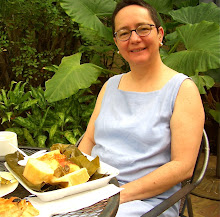


 The hot food was the most appetizing to me -- stews and soups of all description! Couldn't be more delicious! A nutritious meal is around 20 to 50 cords, and ranges from a simple lunch to a veritable feast! Of course sweets and cakes and pastries, as well as refrescos and coffee were also available to round out a wonderful meal.


